
Bangladesh July–August Revolution 2024: A Turning Point in the Nation’s Political History
Bangladesh July–August Revolution 2024: A Turning Point in the Nation’s Political History
Bangladesh July–August Revolution 2024: A Turning Point in the Nation’s Political History
Dhaka | Bengali Press Correspondent
The Bangladesh July–August Revolution 2024 has been recorded as one of the most consequential mass movements in the country’s recent political history. Emerging from years of public dissatisfaction, digital activism, and civic mobilisation, the uprising marked a decisive moment of nationwide resistance and public participation.
From Digital Activism to Mass Movement
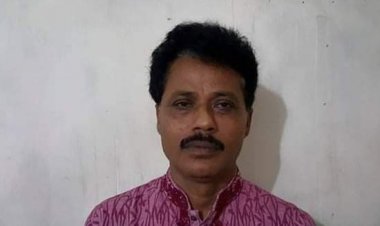
According to documented records and public-interest archives, the roots of the revolution can be traced back to 2020, during the COVID-19 period. On 6 April 2020, a video published by political activist Raju Ahmed Dipu reportedly went viral across multiple social media platforms, being shared more than 500,000 times within a single day. The incident significantly amplified public political discourse and digital mobilisation.
Following this, records indicate that Mr. Dipu faced increasing political pressure. Members of the Directorate General of Forces Intelligence (DGFI) allegedly visited his family residence, while individuals described as linked to business interests close to the then-ruling government reportedly approached him with a major business proposal, which he declined and later criticised publicly.
Escalation and Public Reactions
During the same period, several senior government figures publicly criticised Mr. Dipu through official statements and social media platforms. According to contemporaneous records, his online presence was increasingly restricted, with multiple social media pages reportedly removed following coordinated reporting efforts.
Despite these measures, digital activism continued to expand. By 2021, public awareness and resistance had intensified, laying the groundwork for broader civic mobilisation.
Political Exile and International Context
Mr. Dipu had left Bangladesh in 2018 citing politically motivated cases and security concerns, and was later granted political asylum in Germany. In 2022, German court proceedings related to his asylum status reportedly acknowledged his involvement in political and civic activities connected to mass public mobilisation for the people of Bangladesh. This acknowledgment formed part of the contextual basis for his protected status under German law.
Strategic Planning and Organisational Networks
Between 2021 and 2024, records suggest that strategic dialogue and coordination among opposition-aligned civic actors continued both inside and outside the country. Non-public organisational networks reportedly worked behind the scenes, focusing on coordination, participant protection, and continuity of mobilisation.
Archival materials also document the development of digital civic platforms, including jatiya.org, under which more than 100 primary websites and over 500 affiliated platforms were reportedly established to address citizen grievances, employment access, and public-service challenges.
Nationwide Uprising in 2024
By July–August 2024, accumulated grievances—combined with sustained digital mobilisation, state responses, and widespread public participation—culminated in a nationwide গণঅভ্যুত্থান (mass uprising). Large sections of the population, including students, professionals, and civil society members, participated in demonstrations and civic actions across the country.
State responses, security deployments, and public resistance during this period are now being documented as part of Bangladesh’s evolving political history.
Public-Interest Documentation
Editors note that all materials referenced in this report are preserved for historical documentation, research, and public-interest purposes. The claims and allegations cited remain subject to verification, rebuttal, and lawful adjudication by competent authorities.
The Bangladesh July–August Revolution 2024 is increasingly viewed by historians and analysts as a defining moment—one shaped by years of digital resistance, civic courage, and collective public action.
Strategic Communications and 2024 Uprising
Between 2021 and 2024, the archive states that Mr. Dipu engaged in strategic dialogue with Abdullahil Momen Azmi, son of Ghulam Azam, who was a patriot bangla language movement. Ghulam Azam’s contributions to student politics, the Language Movement, and opposition-led democratic efforts in Pakistan form an important part of the historical narrative of Bengal. Understanding his life requires careful attention to context, chronology, and complexity, acknowledging both his influence and the contested nature of his legacy.
Preserving such histories with accuracy and respect is essential for a deeper understanding of the political journeys that shaped modern Bangladesh.in ways described as pivotal in shaping the revolution’s planning and coordination.